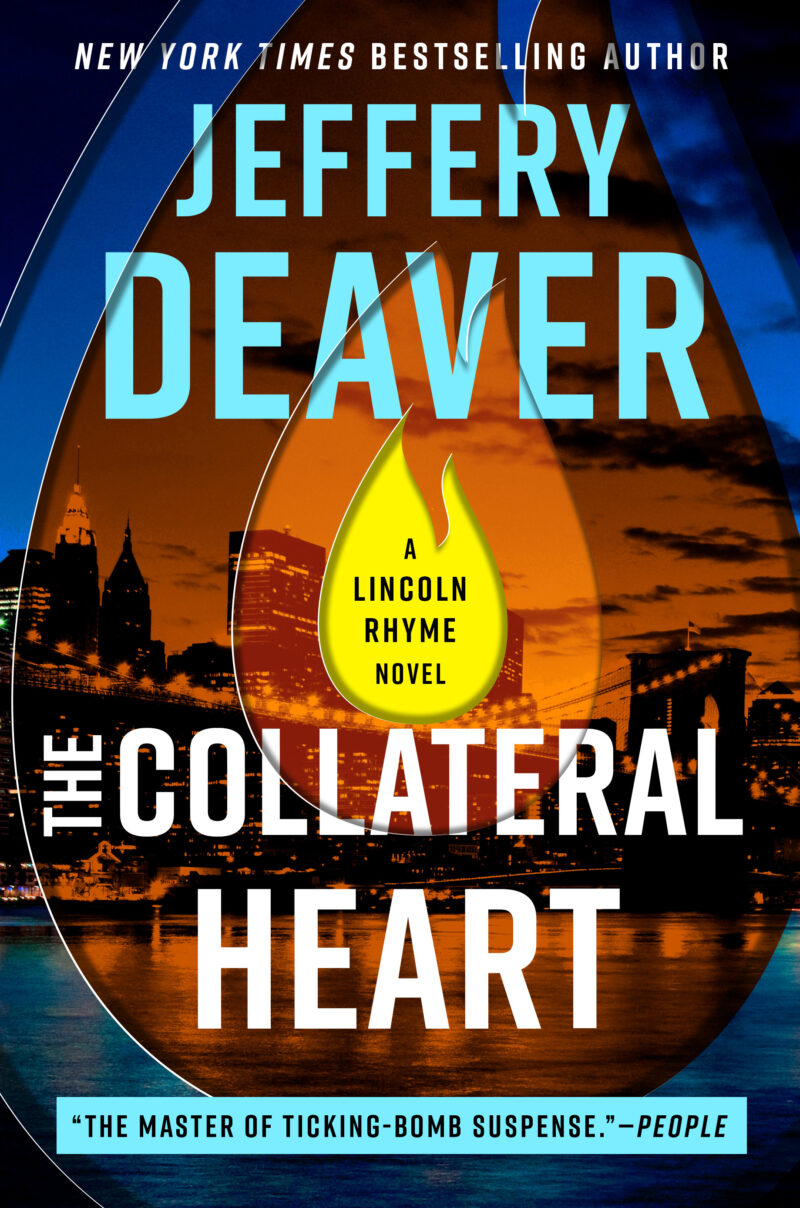
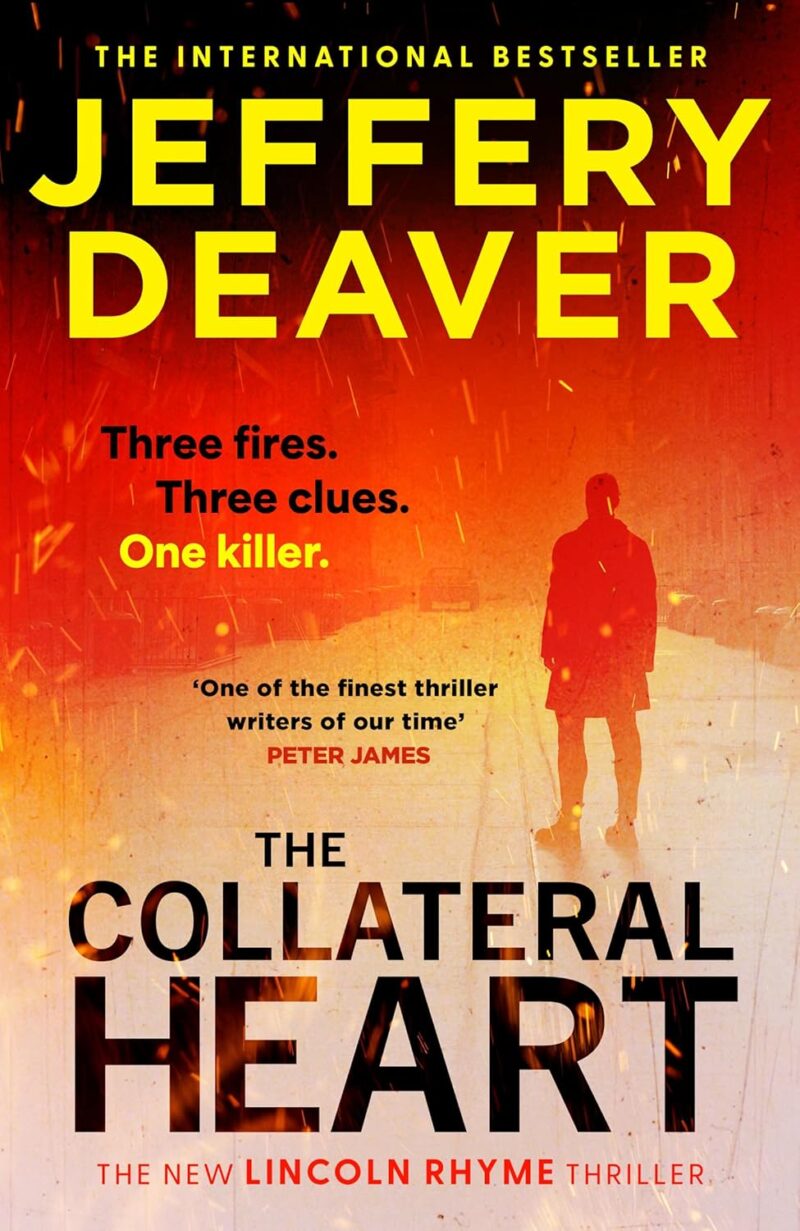
The Collateral Heart Q&A
Question: In this book, Lincoln Rhyme makes a decision about a new medical procedure he’ll undergo. You have often written about his spinal cord injury and the procedures he goes through to improve his situation and health. Is everything reality based? And if so, how do you keep up with the latest advancements in this field?
Jeffery Deaver: Lincoln is a forensic scientist, of course, and we can emphasize the second word in the description. He is constantly learning about the latest developments in the physical world as they relate both to his job as a crime fighter, and his condition as a quadriplegic. One of the astounding recent developments includes nerve and neuron transfers, which can restore some sensory and motor functions. These are real and, though not for every patient, can make huge differences in lifestyles. Lincoln, naturally, has been exploring if this treatment is something that will help him both as an investigator and as a patient. As for keeping up, well, that’s the work-a-day life of a writer, hours upon hours of research (which we authors love doing, by the way; going down rabbit holes of sources is a great excuse not only to gather information, but to delay sitting down for the arduous task of actually writing the book!).
Q: You introduce a very interesting new character, Detective Desdemona Vale. Who or what was your inspiration for her?
JD: One of the joys of writing is the creation of new characters—and for two reasons. One, we authors are curious about human nature and by “breathing life” into someone, we can explore aspects of people different from those of our existing characters. Two, as a thriller writer, I have to populate my books with appealing individuals whom I can threaten on every level! I want my readers to frantically flip through the pages to see what happens next. Des Vale is a complex woman—a mother and grandmother negotiating a difficult domestic scene and a dogged small-town cop. We’re rooting for her to succeed… and survive to the end of the book. Hm. I wonder if she does…
Q: The book mentions some of the AI systems that police are increasingly using, including a voice-activated LLM (large language model) that Lincoln uses. You don’t shy away from the pros and cons of them. What are your thoughts on these kinds of advancements in policing?
JD: AI and LLMs are here to stay, and any writer of contemporary police procedural fiction must take them into account. Law enforcement has always been on the cutting edge of technology (fingerprints have been in use to identify criminals since the 1880s), and these systems will be more and more integrated into policing with every passing month (well, at this rate, every passing day!). Like the use of autonomous weapons, their application in policing is controversial, as the devices take discernment and judgment away from humans. As ChatGPT and Claude admit, their results can be mistaken. That’s one thing if it occurs in a term paper about William Shakespeare; it’s quite another if the LLM identifies an innocent person as a murderer. By the way, AI also provides wonderful grist for thriller writers. For an example, see the book I just wrote with Isabella Maldonado, Face Last Seen, about how terrifying those autonomous weapons I just mentioned can be.
Q: Another new character introduced is Dr. James Harper, a historian and podcaster. You are a fan of podcasting, and you even share some of your favorite podcasts at the end of the book. Why do you think podcasts are a great way to inform or tell a story?
JD: I do indeed love podcasts. I’ve always listened to them and during the pandemic I spent hours and hours listening to topics like history, true crime, politics, and culture. Since they are so popular now, listened to by tens of millions, I got the idea: what if someone were inspired by a podcast to commit a crime? It was a perfect conceit, as every week there was a new installment on a theme—which is just the idea that the villain in my book seized on to terrorize New York City.
Q: If you had a podcast, what would the subject be?
JD: That’s a good question! I could do one about cooking, about true crime, about fiction, about movies… But since those topics are well covered by the pros, I’d probably stick to: “What Podcasts to Listen to While Walking Your Dogs.”
Q: My last question. There is a smaller storyline in the book about drug addiction, rehab, and the impact it can have on a family. It is very realistic and touching. Why did you decide to include that as part of this story?
JD: I tell my students that they should never get up on a soapbox and preach about political or social issues. (Samuel Goldwyn, the movie producer said, in paraphrase, if you want to send a message, go to Western Union.) But that doesn’t mean we should avoid important issues in our commercial fiction, just the opposite; they add resonance and heft to a book. We do, however, have to integrate them into the story in a dramatic way. Addiction and recovery, and resulting risk of domestic abuse, are situations that many people deal with—I’m sure that readers have far more personal experience with those topics than with serial killers and terrorists, so I wanted to explore the issues of the difficulty of confronting those challenges and the hope of redemption, as much as telling a tale of crime-solving.